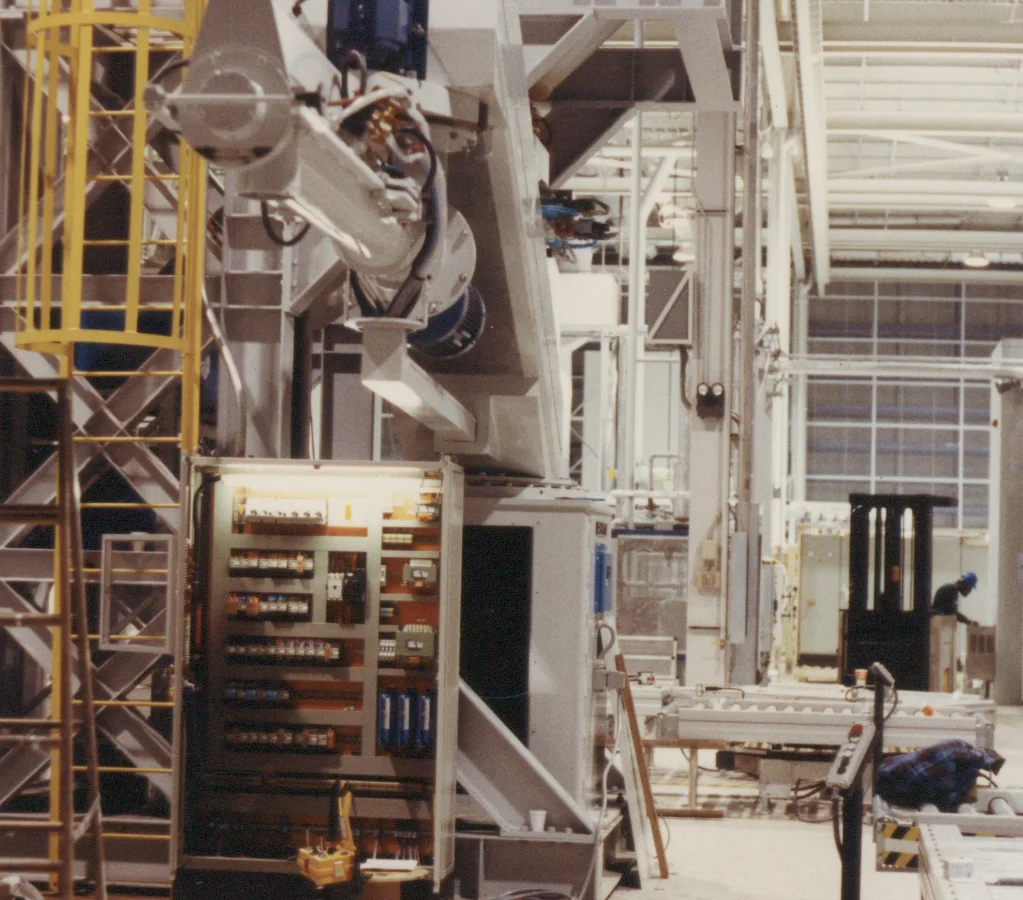
Continuous Sand Mixers
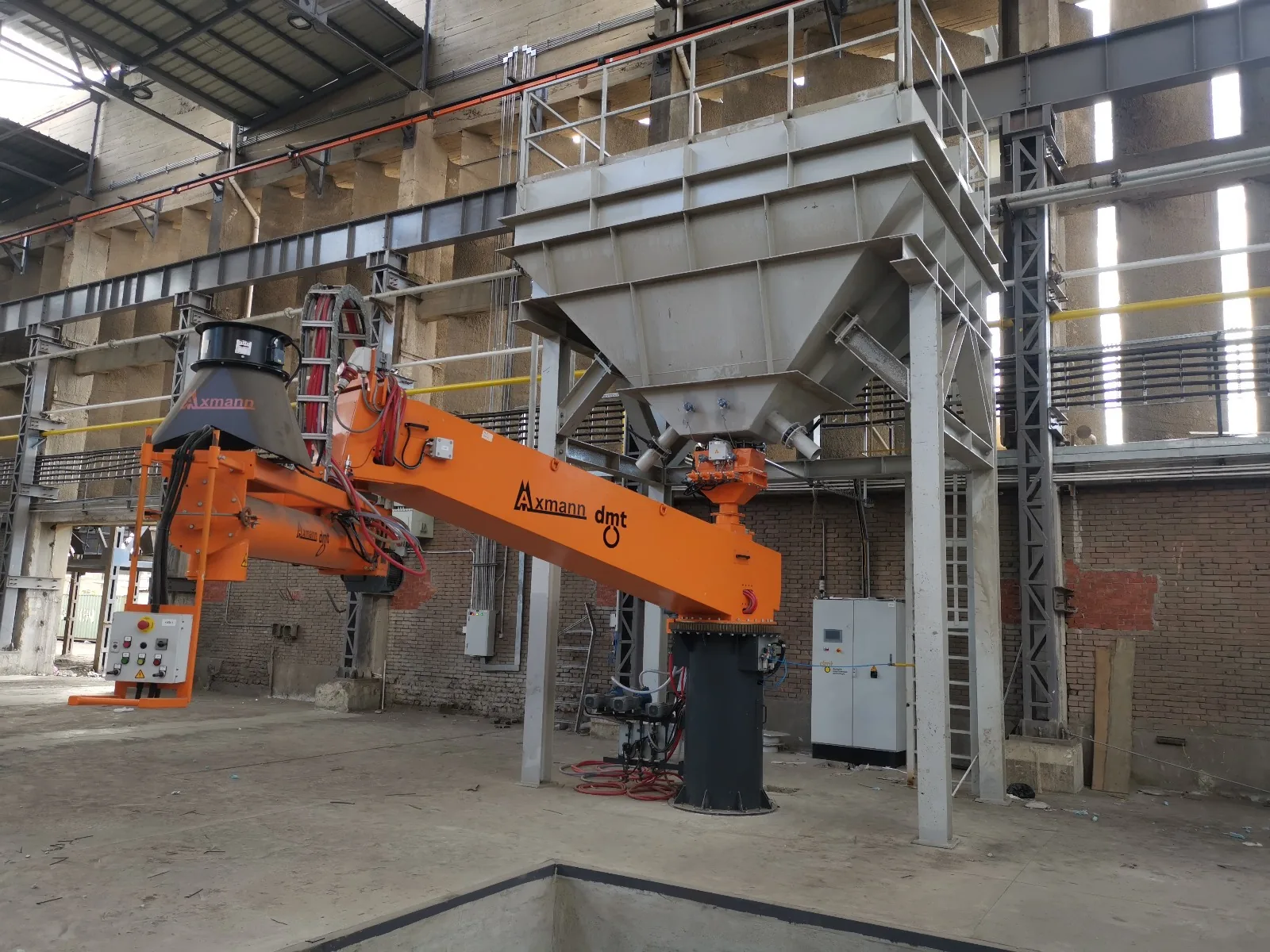
Single, double and triple-arm mixers. Blades, arms and liners are the most requested wear parts we supply.
A stopped moulding line costs more in one hour than the part ever will. Send us the nameplate of your machine and we identify the part against the original drawing. We have kept every drawing since 1909.

When a foundry line stops, the cost is not the component. It is the melt that cannot be poured, the shift that cannot be run and the delivery date that moves. That is why a parts enquiry is handled differently here from a quotation for a new line: it goes straight to someone who can look the machine up, not into a sales queue.
We answer parts enquiries as fast as we can, and in practice that usually means the same working day. The drawing archive is in our own building, so identifying a machine takes hours, not weeks. Once a part is identified, critical components ship from stock in Germany within 24 hours.
This matters more here than it does at most suppliers. Axmann machines are built to last decades, and they do: mixers installed in the 1950s and 1960s are still in daily production. But the longer a machine runs, the further it outlives the catalogue it came from, and the more it depends on someone still having the drawing. Building equipment that lasts is the easy half of the promise. Keeping it running is the other half.
Axmann has kept the drawing of every machine it has built since 1909. Folders, rolls and plan chests, all of it numbered, all of it still in the building.

When a part has to be identified, someone walks into this room and pulls the original. Not a scan of a scan, and not a dimension measured off a component that has already worn away. The drawing the machine was actually built from.
That is why a mixer installed in 1962 is still a supported machine, and it is why identification is usually a matter of hours. The drawing is here in Wenden-Gerlingen, not in the system of a supplier that no longer exists. Someone walks down the corridor, finds the number and sends you the answer.


The nameplate is the fastest route. Everything else we can work out from there.
A photograph beats a transcription, because old plates are often worn. If the plate is gone, photograph the machine and the part instead and tell us roughly when it was installed.
Use the form below, or email the photograph directly. Describe the part in your own words. You do not need the correct technical name, that is our job.
We look the machine up in the archive, confirm the part against the original drawing, and tell you whether it is in stock, has to be manufactured, or whether a different solution makes more sense.
Standing at the machine with your phone? Send the photograph straight to our engineers.
Email a Photo of the NameplateWear parts, drive components and control elements for the equipment Axmann builds, and for the machines around it.
A copy is measured off a component that has already worn, so it inherits that wear. A part remade from the drawing carries the original dimensions, tolerances and material specification.
Nameplates wear away. The archive lets us work back from a partial number, a machine type or even a photograph of the installation.
Critical components are held in stock and ship within 24 hours of identification, to anywhere we have equipment running.
Design, fabrication and controls are all in-house in Wenden-Gerlingen. A replacement part does not pass through three suppliers.
If a repair is not worth it, or if we are not the right source for a part from another make, we say so rather than quote for the sake of quoting.
Where a machine keeps failing, the same engineers can price a control or drive upgrade that fits inside a planned shutdown.
In most cases, yes. Axmann has kept the drawing of every machine it has built since 1909, and that archive is still in our own building. Once we have identified the machine, a wear part is usually either in stock or can be manufactured to the original specification. Machines from the 1950s and 1960s are still in daily production at several foundries, and they are still supported.
The nameplate is the fastest route. It carries the machine type and a serial or drawing number, which is what we look up in the archive. A photograph of the nameplate is more reliable than a transcription, because old plates are often worn. If the plate is missing or illegible, send photographs of the machine and the part itself, together with the approximate year it was installed and the foundry it stands in.
As fast as we can, because we know what a stopped line costs. In practice a parts enquiry is usually answered the same working day: the drawing archive sits in our own building, so identification is a matter of hours rather than weeks. Critical components then ship from stock in Germany within 24 hours. If a drawing takes longer to track down, we tell you that immediately rather than leaving you waiting.
Our archive covers Axmann equipment. For other makes in the same sand plant we can often help with wear parts that are not manufacturer-specific, such as mixer blades, liners, conveyor components and dosing elements, and we can engineer a replacement where the original supplier no longer exists. Tell us what you have and we will say honestly whether we are the right source.
Often it is. The mechanical structure of a well-built mixer or reclamation plant outlives its controls and drives by decades. Where the frame and housing are sound, replacing the control system, drive or wear components costs a fraction of a new installation and can be done inside a planned shutdown. Where it is not worth it, we will tell you that too.
Fill in what you know. A missing field will not hold us up, and you can email the nameplate photograph separately.
Most parts enquiries come from one of these three. All of them are still supported decades after installation.
Single, double and triple-arm mixers. Blades, arms and liners are the most requested wear parts we supply.
Screens, liners and attrition components in a plant that runs abrasive sand around the clock.
Rollers, chains, drives and transfer components along the conveyor line.
Looking for a different machine?
View All Products