

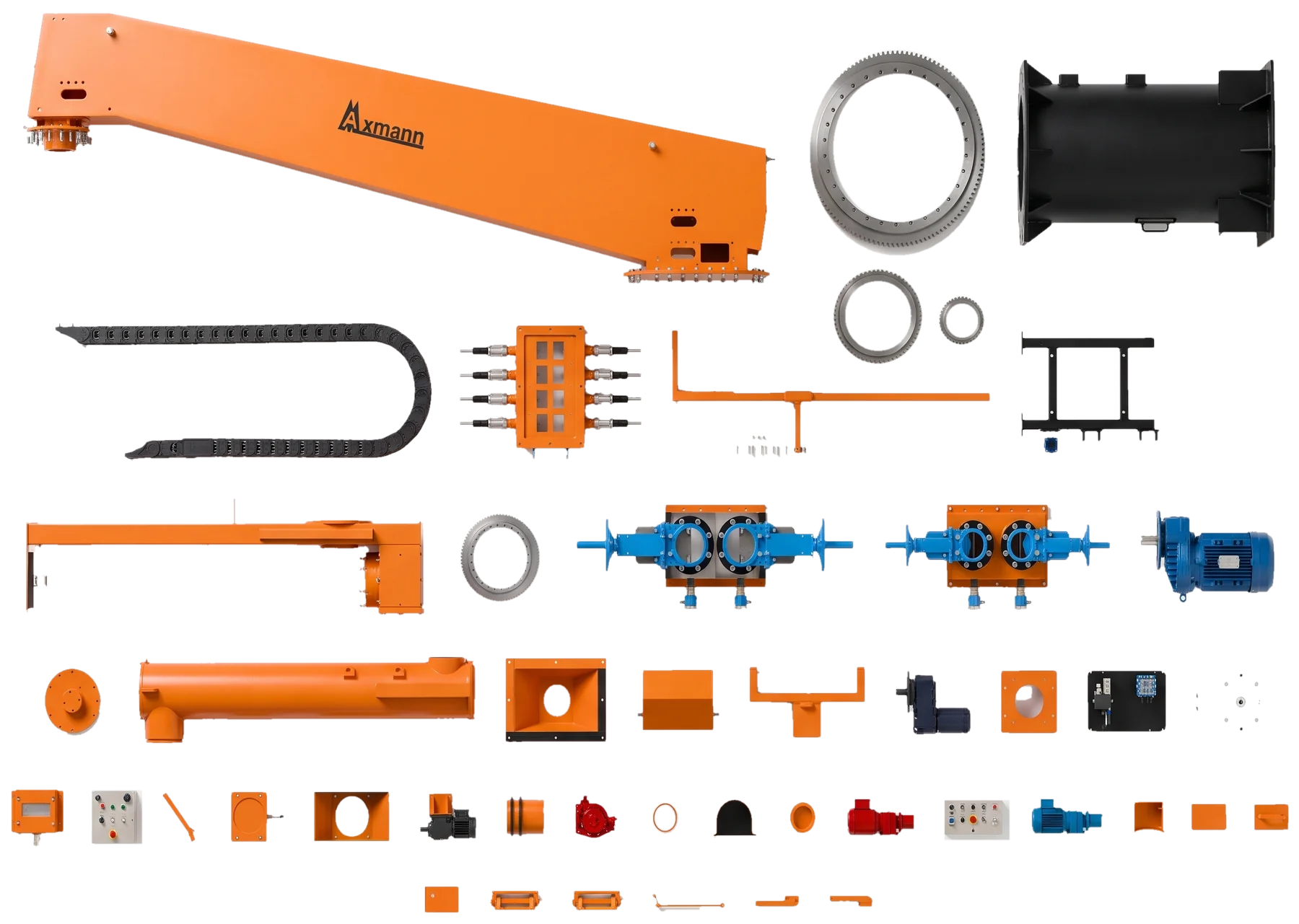
Spare Parts
Identification against the original drawing, and parts from stock. Often the first step before a full modernisation.
The steel outlives the electrics by decades. Where the structure is sound, renewing controls, drives and worn components costs a fraction of a new installation, and we have been doing it on our own plants for over fifty years.

A mixer frame, a trough, a reclamation vessel: these are heavy fabrications designed with margin, and they do not tire. What ages is everything attached to them. Control systems lose their spare parts. Drives and motors reach the end of their service life. Dosing becomes imprecise. Dedusting no longer meets the limits it was built to.
That is why modernisation is usually the cheaper answer. You are not buying a machine again, you are buying back the years the machine still has in it. Our reference list carries 75 documented modernisations and conversions, the oldest from the 1950s and the most recent from 2024.
There is a limit, and it is a simple one. If modernising costs more than building new, we say so. That is the honest answer more often than people expect, and it is the reason the assessment comes before the quotation.
Fourteen foundries in the reference list had an Axmann installation modernised by Axmann, between ten and thirty-five years after it was built.
1989 → 2024
A German foundry took an Axmann sand mixing plant in 1989. In 2024 the same plant was overhauled and modernised, by the company that built it, working from the drawing it was built to. Thirty-five years apart.
| Year | Country | What was modernised |
|---|---|---|
| 2024 | Germany | Sand mixing plant overhauled and modernised, 10 t/h |
| 2019 | Germany | Sand reclamation plant modernised |
| 2015 | Germany | Reclamation rebuilt with shakeout grate, lump breaker, sand cooler and dedusting |
| 2014 | Germany | Four TMV three-shaft mixers modernised with bunker and binder dosing, 10 t/h |
| 2013 | Germany | Casting and cooling line extended to carry a 25 tonne load |
| 2006 | Germany | Four TMVG crane mixers modernised, 15 t/h |
| 2001 | Belgium | Two TMV three-shaft mixers modernised; reclamation extended, 20 t/h |
Customer names are left out by agreement. Every figure above is taken from our own reference list, and we are happy to go through the detail of a comparable project in a technical conversation.
Twelve things we fit to lines that are already running. Most projects take three or four of them, chosen by what the line is actually doing wrong.
| Area | What you recognise | What gets fitted |
|---|---|---|
| Sand | In summer the sand runs hot, bench life collapses, you add hardener and the moulds still come out soft. | Sand cooler in the return loop, sand temperature measured before the mixer, and binder and hardener dosing that compensates for it. |
| Sand | Dosing was set at commissioning and nobody has touched it since. Consumption drifts and nobody can say why. | Loss-in-weight dosing with feedback on throughput, so what holds is the recipe rather than the setting. |
| Reclamation | Reclaimed sand still carries binder residue, so new sand consumption stays high and surface finish suffers. | A thermal stage behind the existing mechanical plant. Excellent with alkaline phenolic; with furan the residual salts decide, so we test your sand before quoting. |
| Reclamation | Lumps and tramp iron reach the mixer and chew through wear parts. | Shakeout grate, lump breaker and magnetic separation renewed at the reclamation intake. |
| Dust | The extraction dates from the nineties. The limit has moved since. | Extraction at shakeout, mixer and reclamation, sized for the limit that applies to you: 0.1 mg/m³ across the EU, 0.05 in Germany. |
| Controls | The PLC is out of support and nobody stocks the cards any more. | New PLC, switchgear and operator terminals on a single architecture. The mechanical plant is not touched. |
| Controls | Every casting is set by hand, from memory, and the result depends on who is on shift. | Recipe management per casting, so the line repeats the same settings whoever is on shift. |
| Controls | A bad batch turns up at inspection and nothing recorded says where it came from. | Data historian on every cycle, mould tracking from moulding station to pouring, and OEE reporting out of the same data. |
| Drives | Motors run flat out or not at all, and every start is hard on the plant. | Variable frequency drives on mixer and conveying motors, with insulated bearings or shaft grounding, because otherwise shaft currents destroy the bearings you just paid to fit. |
| Drives | Bearings fail without warning, usually in the middle of a shift. | Vibration and temperature sensors on mixer shafts and drives. The signal points at a part we already hold in stock. |
| Capacity | The order book grew and the line cannot keep up. | Dosing, conveying and reclamation throughput raised, within the design envelope of the machine you have. |
| Capacity | You are moving to a different binder or a different sand. | Dosing, mixing time and reclamation duty recalculated for the new chemistry, and the hardware changed where the numbers say so. |
If what is wrong with your line is not on this list, it is still worth a call. Half of these are on the list because a foundry asked for them first.
The nameplate gives us the drawing number, the drawing gives us the original design. We know what the machine was built to do before we look at what it does now.
Present condition, available space, the sand and binder you run, the output you want and the shutdown windows you have. The constraints decide the design.
A control retrofit is measured in days, a reclamation rebuild in weeks. We give you the window before the order, and plan it into a shutdown you already have.
Design, fabrication, controls and installation are in-house in Wenden-Gerlingen. Nobody hands the problem to a subcontractor halfway through.
If the work costs more than a new installation, that is what the assessment will say. It is the most useful sentence we can give you and it costs you nothing.
A modernised machine goes back into the archive under its own drawing. Ten years from now the spare part is still identifiable.
When the structure is still sound. The frame, housing and troughs of a well-built mixer or reclamation plant outlive their controls and drives by decades, and those are the parts that fail first. If the mechanical side is in order, renewing the electrical and worn components costs a fraction of a new installation and fits into a planned shutdown. If the structure itself is worn out, or if the capacity you now need is far beyond what the machine was designed for, replacing is the cheaper answer and we will say so.
That depends entirely on the scope, so we do not quote a single figure. Renewing a control cabinet and drives is measured in days. Rebuilding a sand reclamation plant with a new shakeout grate, lump breaker and cooler is measured in weeks. What we do commit to is telling you the window before you commit to the work, and planning it against a shutdown you already have rather than creating a new one.
Often, yes. Controls, drives, dosing and dedusting are not manufacturer-specific, and we have integrated equipment from other suppliers into lines we were rebuilding. What we cannot do is pull another manufacturer's drawing out of our archive, so identification and survey work takes longer and we will be clear about that before starting.
Within the limits of the design, yes. Dosing, drives, conveying and reclamation capacity can often be raised, and in 2013 we extended an existing casting and cooling line to carry a 25 tonne load. What does not work is asking a machine designed for 5 tonnes an hour to deliver 20. The survey establishes which of the two situations you are in before any money is spent.
We start from what the machine is, not from a catalogue. The nameplate gives us the drawing, the drawing gives us the original design, and a survey of the installation gives us its present condition and the constraints around it: available space, shutdown windows, the sand and binder you run now and the output you want. From that we say what is worth renewing, what should be replaced outright, and what the work would cost.
What it runs now, what you need it to run, and what is stopping it. Nothing below is required except a way to reach you.
Three quarters of the modernisations in our list touch one of these.
Identification against the original drawing, and parts from stock. Often the first step before a full modernisation.
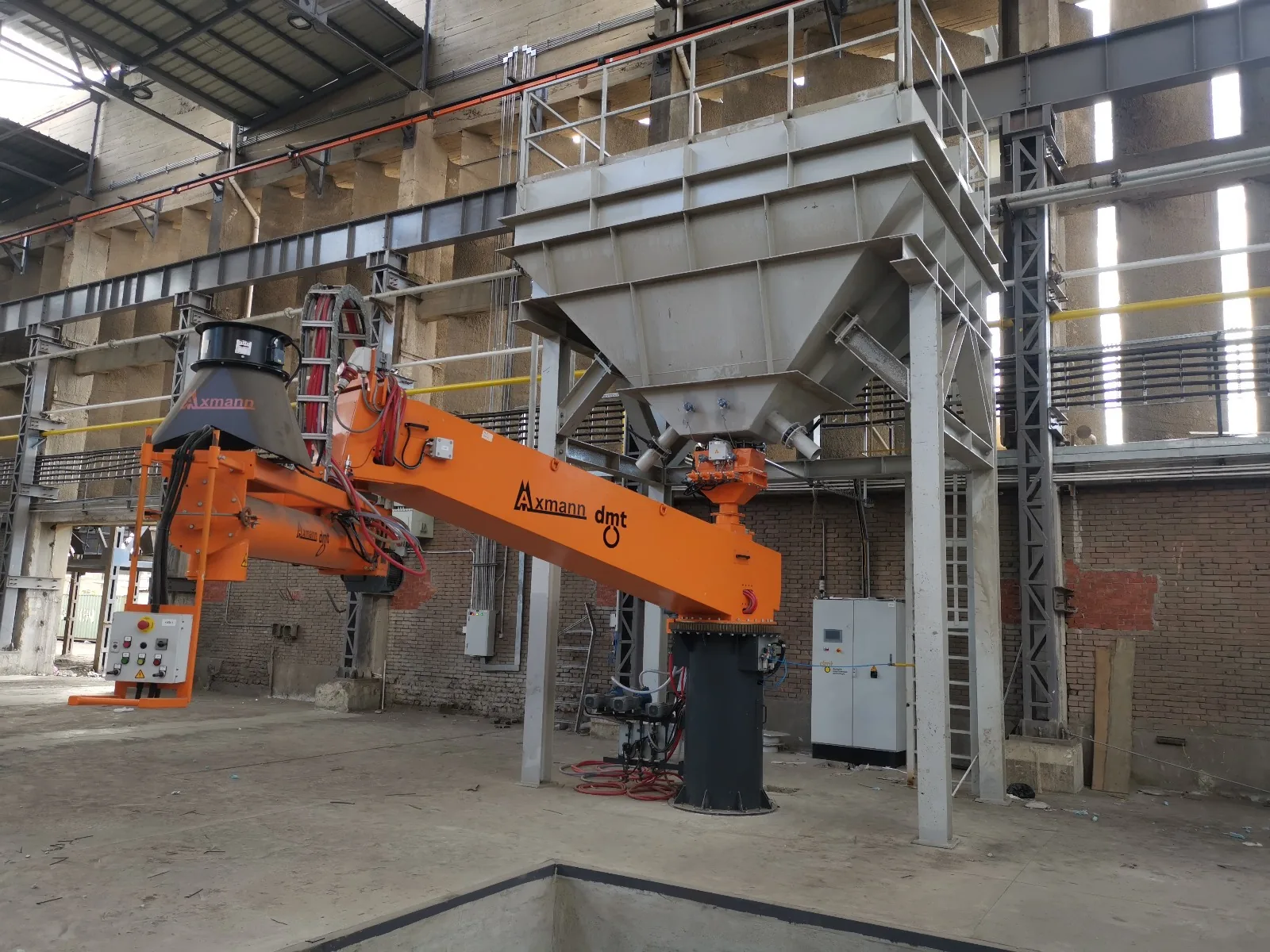
The most frequently rebuilt installation in the list: shakeout grate, lump breaker, cooler and dedusting.
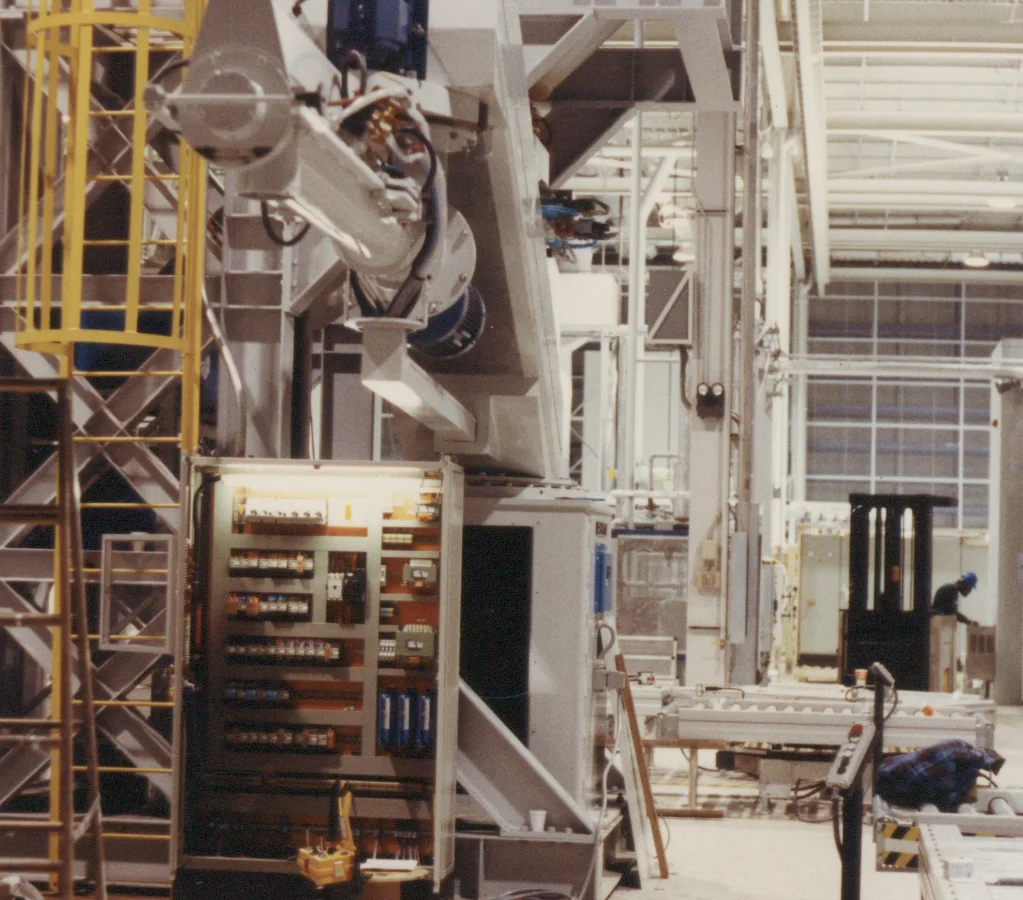
Single, double and triple-arm mixers, modernised in batches of two and four in the projects above.