

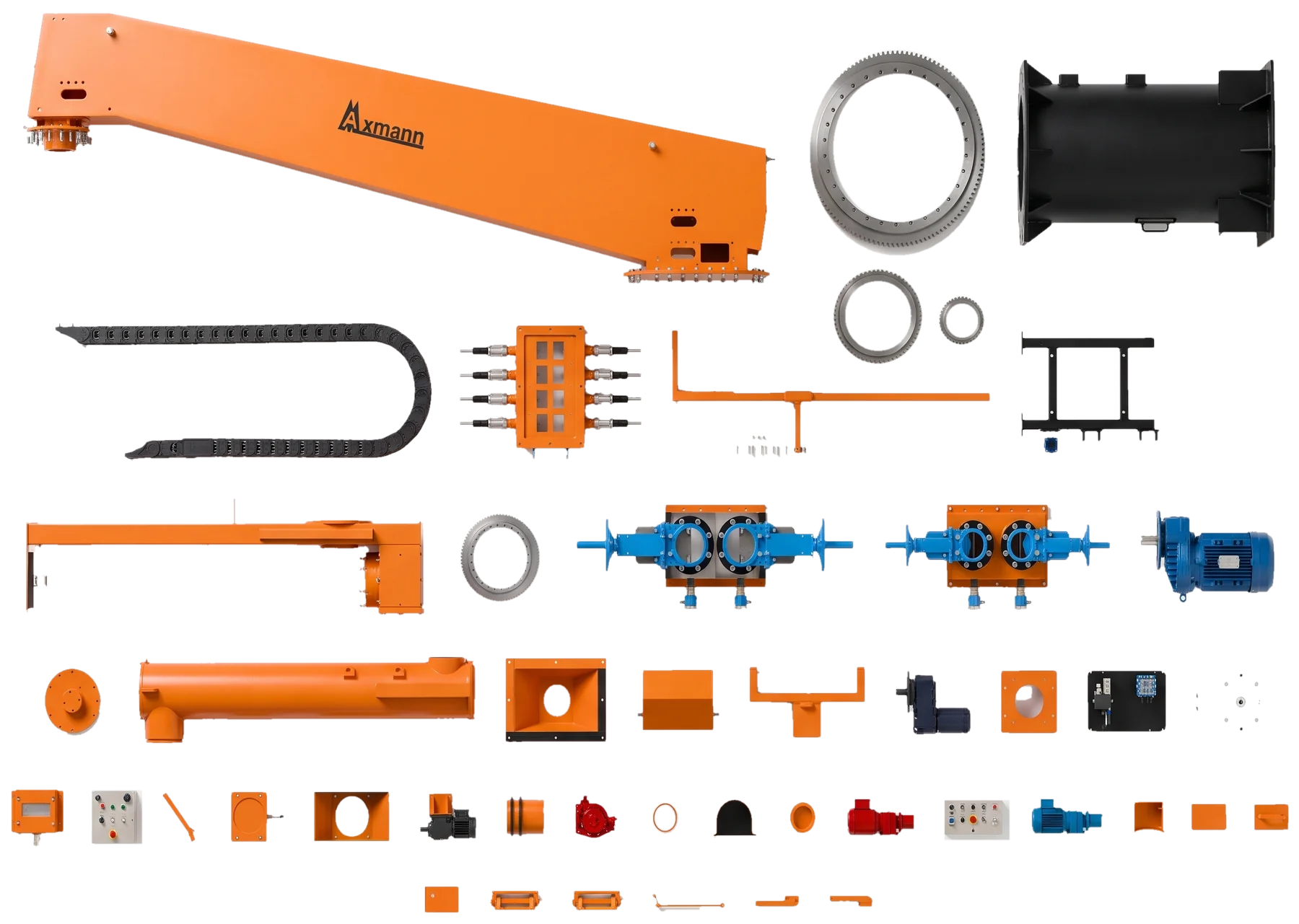
Spare Parts
Identification against the original drawing, and parts from stock. Often the first step before a full modernisation.
Shop number ten had stopped. A survey in 2021 went through the whole foundry area by area, and by the summer of 2023 a new moulding line stood where the old one had: sixteen positions, built around a casting that has to stay safe under a freight wagon for thirty-two years.

17,225 t a Year
The programme the plant was sized against
58,000 Castings
Bolsters and side frames in 20GL steel
111 Pages
The survey, finished in under four months
6 Moulds an Hour
The rate the line was built to
The works went up in the nineteen fifties, when eastern Kazakhstan was being industrialised, and it grew with the region: first equipment for the mines, then whatever the next decade asked for. Shop number ten was to go back into serial production on the two castings that carry a freight wagon — the bolster at 570 kilograms and the side frame at 430, both in 20GL cast steel.
Between them those two parts are eighty-five per cent of the volume: 6,950 bolsters and 22,250 side frames a year. Behind them sat a second phase of six more wagon parts at 4,800 pieces each — coupler bodies, draft gear housings, front and rear stops, draft yokes. Added up: 58,000 castings, 17,225 tonnes of good steel.
The buyer was not a wagon builder but the repair works, which order single parts rather than whole wagon sets, which is why the programme is not a multiple of anything. And because it is railway steel, the standard is not up for discussion: a side frame has a specified service life of at least thirty-two years, proven by fatigue testing, and has to be certified before anyone may put it under a wagon. That, rather than the tonnage, is the hard part of the brief.
Four stages: walk the plant, collect the data a modernisation plan needs, build the concept, build the plan. What came back was 111 pages, signed in May 2021, less than four months after the first visit.
A technical survey of this kind is not an equipment list. It asks whether the technology in use still compares with what similar foundries run; whether a machine exists for every operation in the chain, and whether its capacity matches the programme; how the shop actually works shift by shift; whether the key people in it hold the qualifications the work needs; how quality control is organised; and whether the engineering department can develop a new casting process on its own. Thirteen areas, each one marked for improvement, for investment or for restructuring.
Most of this plant came back in better shape than the silence in the hall suggested. The charge yard was sound. Cooling time in the mould was already long enough. Pouring through a stopper ladle was good practice, though under-filling was costing castings. Pattern and gating design, done in-house, turned out to be the plant's real strength and the report said so. Housekeeping was good. Two areas carried the investment mark: the core shop and the moulding end. That is where the money went, and the rest of the plant was left alone.
20,758
Moulds a year. That is what the programme becomes once it is worked through: two castings to a mould for the bogie parts, six for the smaller ones, plus five per cent casting scrap and two per cent mould scrap on top. Set against 5,530 usable moulding hours in the year, it comes out at 3.8 moulds an hour. The line was specified at six. That gap is the margin that stops a bad week becoming a lost month.
The thirteen areas, and what each one is rated against, are set out on the modernisation page.
The survey did not stop at the moulding line. What came out of it was a programme for every area of shop number ten, costed and dated line by line, from the scrap yard to the paint booth.
| Area | What the plan called for |
|---|---|
| Charge make-up | Four cranes, two lifting magnets, a rail weighbridge, a bucket loading station, a hydraulic baling press and four gas-cutting posts |
| Melting | A block of induction furnaces, the arc furnaces repaired and restarted, a charge preheating furnace, a steam cooling tower, ladle heating and four stopper-pour ladles |
| Pouring | Forty cast pouring plates, fifty flasks, driven and free roller tracks, two transfer cars, guarding and a PLC panel |
| Moulding | The continuous mixer, the moulding line, the vibrating table, twelve pattern plates and the line control |
| Core shop | Equipment and spares for three core shooters, core coating, core grabs and the manipulators to handle them |
| Shakeout and reclamation | Shakeout, sand cooling, classification and crushing, and a new-sand intake |
| Shakeout manipulator | A machine of its own for getting heavy castings out of the mould, and the cooling conveyor modified to suit it |
| Casting cooling | The cooling conveyor rebuilt, with an aeration system over it |
| Fettling | A continuous shot blast machine, a pneumatic gun for knocking feeders off, air-arc and gas-cutting posts |
| Heat treatment | The furnaces rebuilt, a new hearth, and a cooling chamber to go with it |
| Laboratory and inspection | Cut-off and polishing machines, magnetic particle equipment, reference samples and the spectrometer relocated into the shop |
| Paint shop | Moved to a different bay and given its own extraction |
| Cranes | Nine cranes repaired and converted to floor control |
| Services and tracking | A compressor station, a chiller, and a system to follow each casting through the shop |
Not all of it was ours to build, and not all of it was built at once. It is here because “a moulding line and a mixer” is what a reference list records, and this is what sits behind that one line.
Three lines on a reference list. Sixteen positions on the layout, inside a fenced installation forty metres by forty-four.
An empty flask comes in on the roller track and goes to one of two pattern-change stations. A double transfer car runs it under the mixer and onto the vibrating table, where it is filled with furan sand and compacted. Then into one of four curing bays while the binder sets. The same car brings the hardened mould back to the draw table, which lifts it clear of the pattern; the pattern goes straight back for the next one.
From there the shop crane, with a belt tilter hung underneath it, sets the flask on an inspection stand, where the mould is looked over and, where it is worth it, repaired. Next the coating station: an alcohol-based refractory coat, lit off and dried in the burn-off cabin. Onto the hydraulic track and into the carousel, which dries the halves one position at a time. A manipulator turns the bottom half through 180 degrees and presents it for core setting, with balancers carrying the weight of the cores so they can still be placed by hand. The two halves go into the closer, the mould is closed, and it leaves on the pouring track.
| Position | What it does |
|---|---|
| Continuous sand mixer, 30–35 t/h | Type TME-5/1750. Furan sand mixed on demand over the fill station, fed from a hopper holding both fresh and reclaimed sand |
| Vibrating table | Compaction of the filled flask, matched to the flask size and the casting weight |
| Double transfer car | Moves pattern and flask between the fill station, the curing bays and the draw table |
| Roller tracks through the moulding bay | The spine of the line: empty flasks in, finished moulds out |
| Draw table with hydraulic power unit | Lifts the hardened mould off the pattern without pulling the print with it |
| Coating station, manipulator and burn-off cabin | Alcohol-based refractory coat, lit off and dried before the mould is closed |
| Hydraulic roller tracks to the carousel | Hands the coated halves over to the drying carousel in the right order |
| Moulding carousel with manipulators and mould closing | Drying position by position, bottom half turned 180°, cores set, halves closed |
| Core-setting balancers | Carry the weight of the cores so they can be placed by hand, and placed accurately |
| Driven roller tracks, pouring and cooling | Carries the closed mould to the pouring positions and on through cooling |
| Hydraulic roller tracks, pouring and cooling | Used where a mould has to be positioned rather than simply moved along |
| Second transfer car | Crosses moulds between the pouring tracks and the cooling tracks |
| Pouring pallet cleaning station | Keeps the pallets flat and clean, which is what keeps a heavy mould sitting level under the ladle |
| Hydraulic power station | One station feeding the draw table, the transfer cars and the hydraulic tracks |
| Control panel with the line PLC | One place the line is run from, and watched from |
| Guarding, walkways and the remaining steelwork | A fenced installation that people still have to be able to work inside safely |
The layout numbers more than seventy roller-bed sections. It was first drawn in 2022, revised, and issued in its final form in August 2023.
Six moulds an hour sounds modest until you put the casting on it. At 570 kilograms a bolster, that is the rate a shop needs to carry seventeen thousand tonnes a year on three shifts — at the uptime a real foundry runs at, not the one in the brochure.
A plant that has been standing still rarely needs everything replaced. It needs somebody to say which parts are still competitive, which need money and which need rethinking altogether — and to say it before a quotation exists, while the answer can still be “leave that one alone”. Here the melting end, the cooling times and the shop's own pattern design came back in good order. The moulding end did not, and that is where the money went.
If your shop has stopped, or never reached the number it was built for, the same sequence applies. The survey is the cheap part, and it is the part that tells you whether the rest is worth doing at all.
What it runs now, what you need it to run, and what is stopping it. Nothing below is required except a way to reach you.
Three quarters of the modernisations in our list touch one of these.
Identification against the original drawing, and parts from stock. Often the first step before a full modernisation.
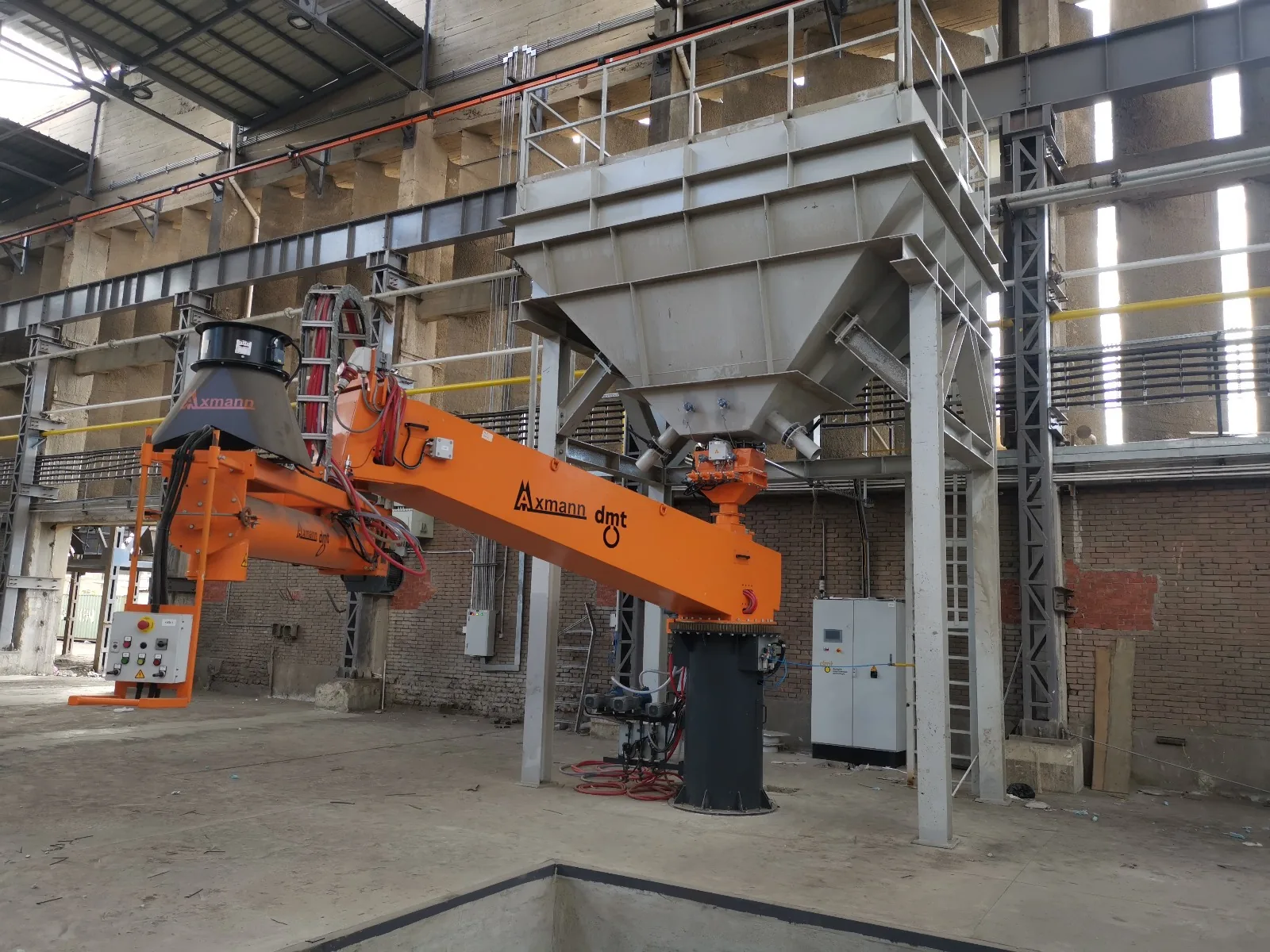
The most frequently rebuilt installation in the list: shakeout grate, lump breaker, cooler and dedusting.
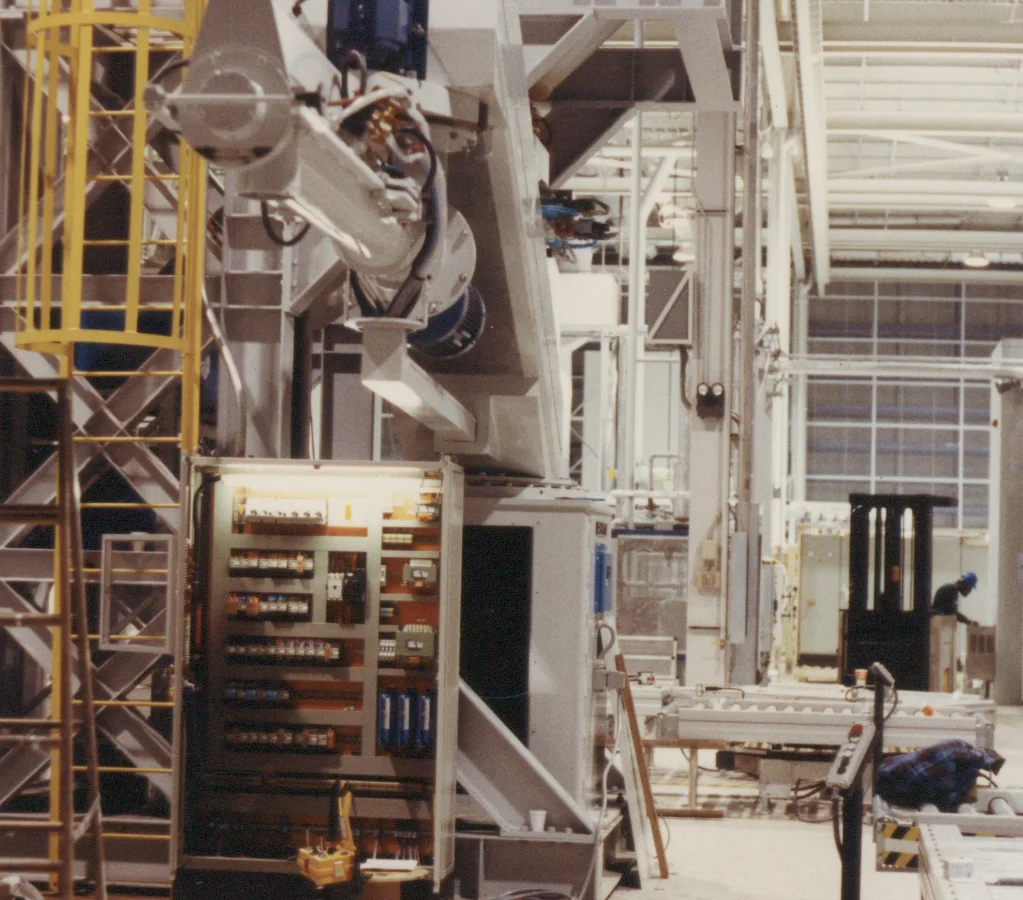
Single, double and triple-arm mixers, modernised in batches of two and four in the projects above.