Shakeout Systems
Casting shakeout and casting handling that receives the cooled mould from the pour station and cooling conveyor.
Pour weight within ±1%, temperature within ±5 °C, hands-free operation. Axmann builds pressure-pour furnaces, stopper-rod ladles and complete automated pouring lines for no-bake, Core Pack and chemically bonded sand, Made in Germany.
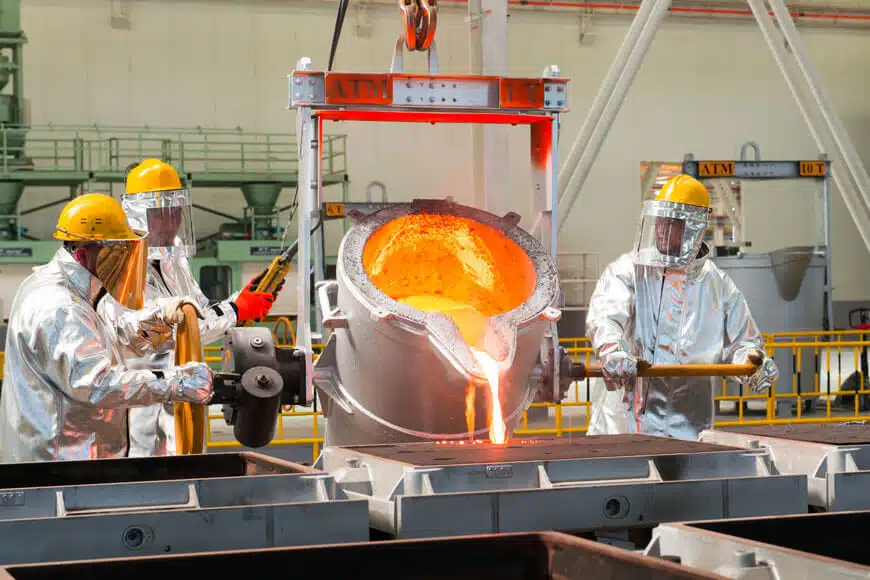
An automatic pouring system (Gießstation, automatisches Gießen) is the foundry station that delivers molten metal into a clamped mould without manual ladle handling. Metal is held in a heated reservoir, a pressure-pour furnace, a stopper-rod ladle, or a tilting teapot ladle, and controlled valves or stoppers meter metal into each mould at a defined temperature, flow rate and pour weight. Modern systems hold pour weight within ±1% and temperature within ±5 °C, numbers no manual crew can match shift after shift.
The effect on casting quality is immediate: consistent internal structure, fewer cold shuts, fewer misruns, tighter dimensional variation from pour to pour. The effect on yield is just as important, per-mould pour weight metered exactly means less over-pour, less scrap at shakeout, less metal consumed per good casting. The effect on safety is the final layer, the operator stays outside the spill radius while the station does the pouring. Axmann integrates in-stream inoculant dosing for ductile and grey iron work, and ties the whole station to the line PLC so every pour is logged for traceability. The pour station feeds directly into the cooling conveyor and onward to shakeout.
The right pour technology depends on alloy, casting weight, volume and whether you need inoculation, Axmann selects per project.
Electrically heated reservoir, gas pressure pushes metal out through a refractory spout. The standard for high-volume grey and ductile iron pouring, tightest pour-weight tolerance.
Automated ladle with pneumatic stopper-rod flow control. More flexible for alloy changes than a pressure-pour furnace, ideal for jobbing foundries with mixed alloys.
Automated tilting for lower-volume or custom alloys where a reservoir furnace is not cost-justified. Still delivers repeatable pour weight via servo-controlled tilt.
Recipe-controlled inoculant dosing into the pour stream, replacing ladle inoculation with much tighter batch-to-batch graphite structure control. Critical for ductile iron quality.
From the pouring reservoir to the conveyor handoff, every component engineered as one coordinated station.
Tighter than any manual crew can match shift after shift. Consistent pour weight means consistent casting weight, structure and quality.
Controlled temperature eliminates cold shuts and misruns, the two most common pour-related defect modes in sand casting.
No over-pour, no scrap trimming, no shakeout runoff. Per-mould pour weight exactly matches mould cavity plus gating, meaningful margin impact.
Operator stays outside the spill radius. The heaviest and most hazardous manual task in a foundry becomes a monitored, remote operation.
Every pour logged with weight, temperature, inoculant dose and timestamp. Quality complaints become solvable with data, not guesswork.
From jobbing (one pour station) to series production (indexed pour over automatic moulding lines), the same architecture scales.
Pouring sits between mould closing and cooling. These are the systems it connects to directly.
Casting shakeout and casting handling that receives the cooled mould from the pour station and cooling conveyor.
The parent hub: automatic pouring, cooling conveyors and shakeout as one engineered package.
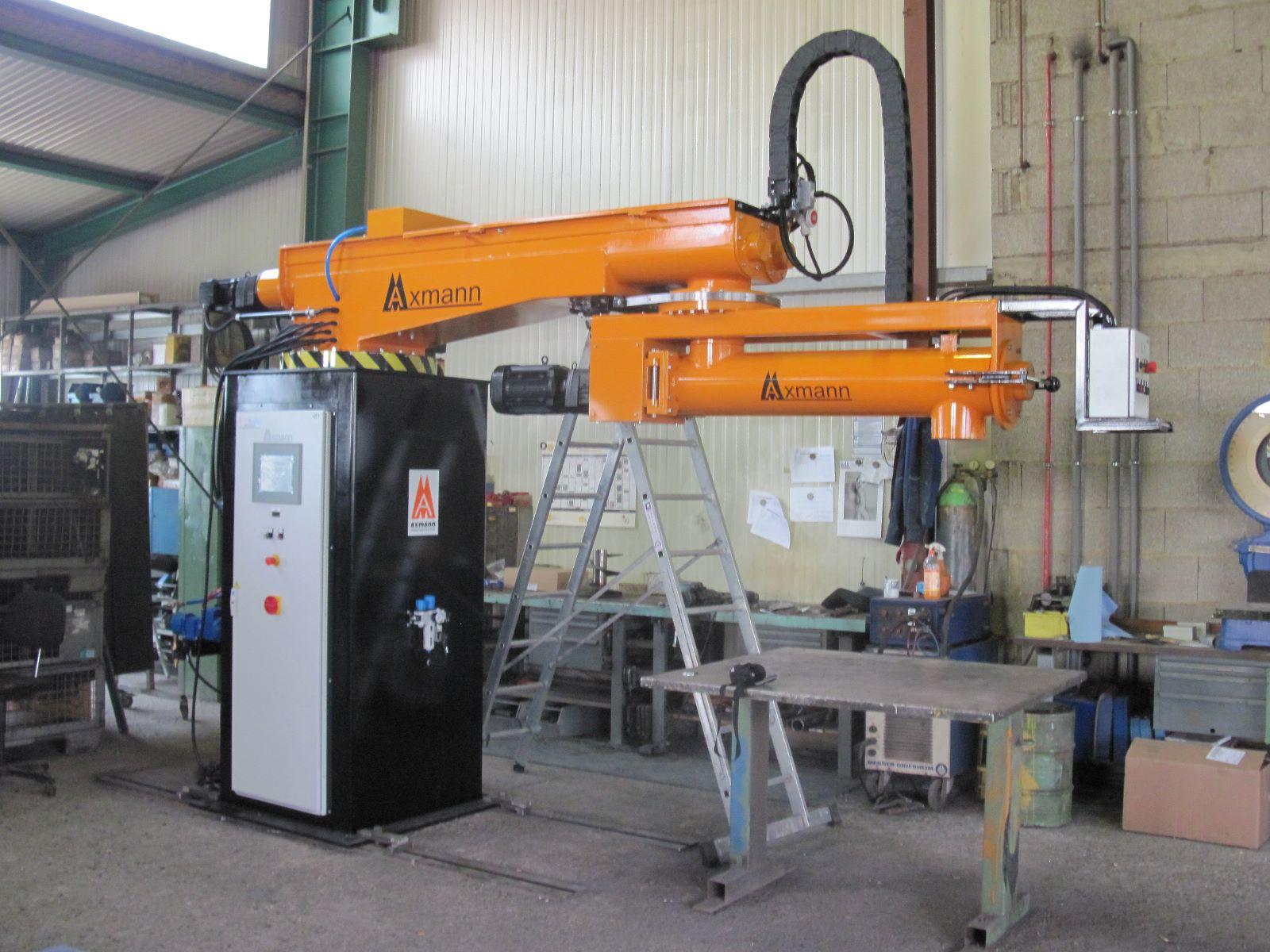
Complete chemically bonded sand lines that pour into the same cooling conveyor architecture above.
Every alloy pours differently. Axmann selects pressure-pour, stopper-rod or tilting architecture based on your alloy mix, casting weight, pour rate and line layout, then integrates inoculant dosing and traceability to your line PLC.
Tell us about your pour: alloy, casting weight, pouring rate target, inoculation requirement, line layout, new-build or retrofit. Our engineers respond within one business day.
Looking for a different machine?
View All Products